
What Is Manual FUE Hair Transplant?
A manual FUE hair transplant uses a fine handheld punch, guided by the physician, to extract individual follicular units directly from your donor area. Each unit is a natural grouping of one to four hairs.
Much of the result of a manual FUE comes down to the surgeon's efficiency and experience. The follicles must be harvested at a natural distance apart, and each one removed cleanly without being transected, or damaged, during extraction. That skill is what protects your donor area and produces a result that looks completely natural.
Because the follicles are taken individually rather than in a strip, a FUE hair transplant leaves no linear scar.

How Follicular Unit Extraction Works
Surgical hair restoration has come a long way. We now know that scalp hair grows in natural groupings of one to four hairs called follicular units, and transplanting these intact units is what makes modern results indistinguishable from your original hair. A FUE hair transplant happens in two stages:
Stage 01
Harvesting
Individual follicular units are removed directly from the donor area with a tiny punch. In place of the linear scar left by older strip methods, follicular unit extraction leaves only very fine dots that go unnoticed unless the head is fully shaved.
Stage 02
Placement
Tiny incisions are made in the recipient area, and your grafts are placed by hand. This placement step is identical whether the follicles were harvested by FUE or by FUT.
A quiet advantage of Manual FUE
This is where manual FUE has a quiet advantage. A follicle can hold one hair or several, and a punched graft is the same size no matter how many hairs it contains. That lets Dr. Gross cherry-pick exactly the right grafts for each zone of your scalp: delicate single-hair units along the hairline for a soft, natural edge, and denser multi-hair units behind it to build fullness.
No-Shave FUE: Hair Restoration Without Shaving Your Head
For many patients, the deciding factor is discretion. A no-shave FUE approach lets you restore your hair without clipping your donor area, so you can move forward without an obvious sign that you have had anything done.
The advantages are real: minimal recovery, a discreet result, and the freedom to plan your procedure around your life rather than around a shaved head.
This is also the practical difference between manual FUE and robotic ARTAS. The ARTAS system requires the donor area to be clipped short so the robot can harvest accurately, so patients who want to keep their length usually choose manual no-shave FUE. If you do not mind shaving and want robotic precision, our ARTAS Robotic FUE page covers that option.
The Science: Why Your Transplanted Hair Lasts
The follicles taken from the back of your scalp keep their ability to grow hair for a lifetime. Because they are your own, your body cannot reject them, so they survive and thrive once placed in the thinning areas.
In fact, those follicles will grow wherever they are placed on your own body. What does not work is using follicles from someone else, even a close family member. A successful, lasting result has to come from your own donor hair.

Manual FUE vs. ARTAS Robotic FUE vs. FUT
Every surgical method ends the same way, by harvesting healthy follicles and placing them where you need density. The difference is in how the follicles are removed.
Manual / No-Shave FUE
Performed by the surgeon, who can cherry-pick follicle types by hand. Minimal recovery, no linear scar, and a no-shave option for discretion.
ARTAS Robotic FUE
A physician-guided robot performs the harvesting with high precision while the surgeon maps the donor area and sets the density. See our ARTAS Robotic FUE page.
FUT
The older strip method. The scar sits discreetly beneath the hair, and it is the most effective way to move the most hair in a single pass, which makes it well suited to larger changes.
Both FUE and FUT are simply two ways to harvest, and the placement is the same for both. For a deeper comparison, see our full FUE vs. FUT guide. For most women, Dr. Gross generally recommends FUE or FUT rather than ARTAS.
Is FUE Hair Transplant Right for You?
Not everyone losing their hair is a hair transplant candidate, and we would rather give you an honest answer than recommend surgery to everyone. A few things Dr. Gross weighs:
Your age
Around 22 is a general minimum, because by then future balding is easier to predict. An experienced physician can sometimes start earlier when the pattern is clear.
Where you are losing hair
A slightly receding hairline is often just the normal shift from a juvenile to an adult hairline, which should not be artificially lowered.
Your donor supply versus the area to cover
If the balding area is large and your donor hair is limited, it is usually wiser to cover a smaller area with good density than to spread grafts too thin.
Whether you need surgery at all
If you are young and thinning slightly, topical minoxidil or oral finasteride may be the better place to start. There is no cure for common baldness, but these can slow it down, and in many cases medical therapy alone is enough.

FUE Hair Transplant Recovery and Results
A manual FUE is minimally invasive, and many patients who have had both methods prefer FUE for its easier healing. Here is what to expect.
Local anesthesia, home the same day
The procedure is done under local anesthesia. We do not put patients to sleep, though an oral tranquilizer is available on request. Most procedures run about four to eight hours. You can usually drive yourself home afterward, unless a tranquilizer was used.
Mild, short-lived recovery
There may be mild discomfort the first night, usually handled with Tylenol or a mild medication, and most patients feel fine by the next day. Infection and bleeding are rare. Some minor forehead swelling can appear for two to three days and then resolves.
Shed, then regrow
Your transplanted hairs shed within the first few weeks. This is normal, the same way leaves drop from a transplanted tree, and it is not a sign anything is wrong. New growth begins after several months, and most of your hair is back by roughly the eighth to tenth month.
Because hair loss is progressive, future sessions may be worthwhile later to add density or address new thinning.
Will My Results Last, and What Density Can I Expect?
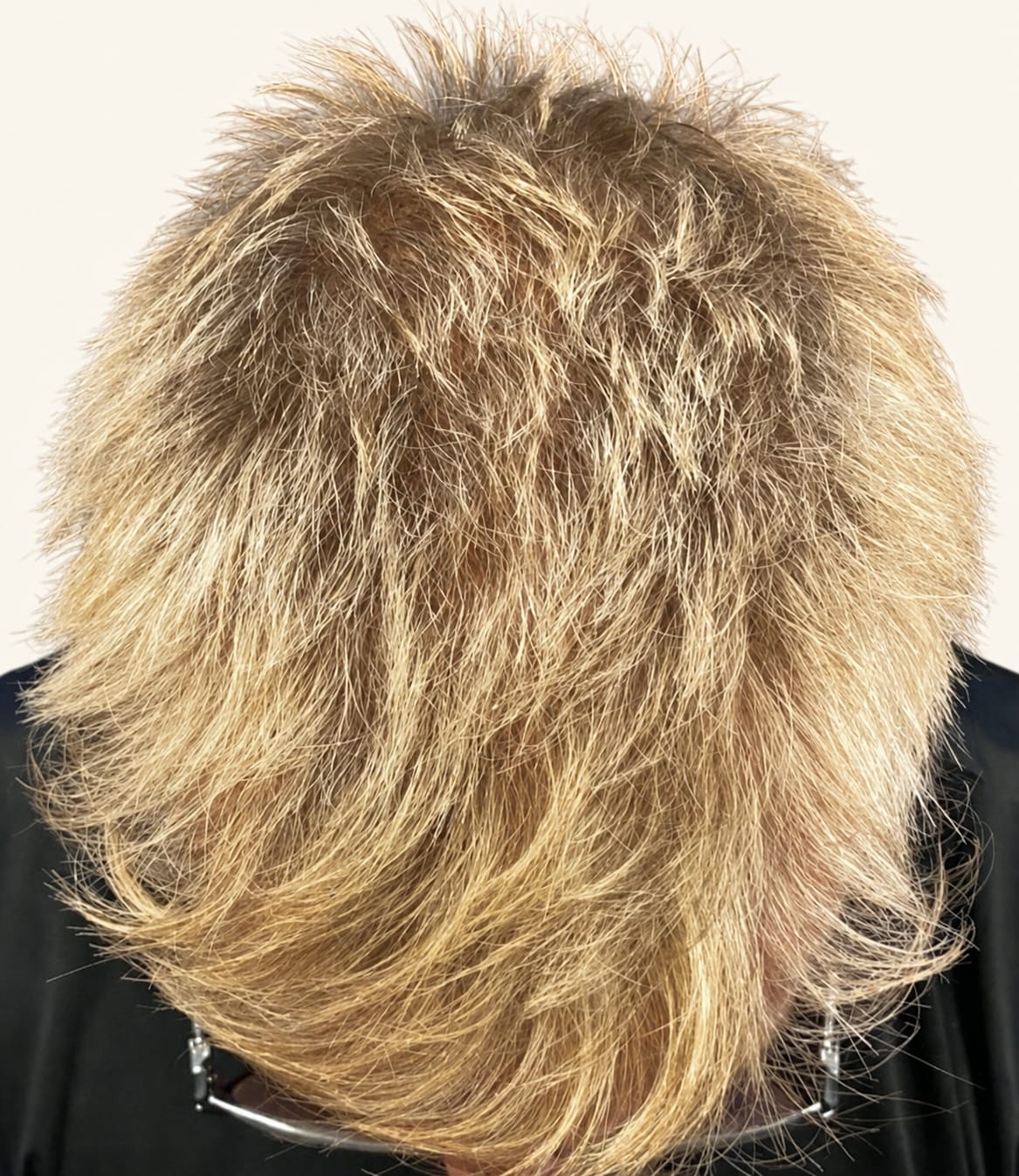
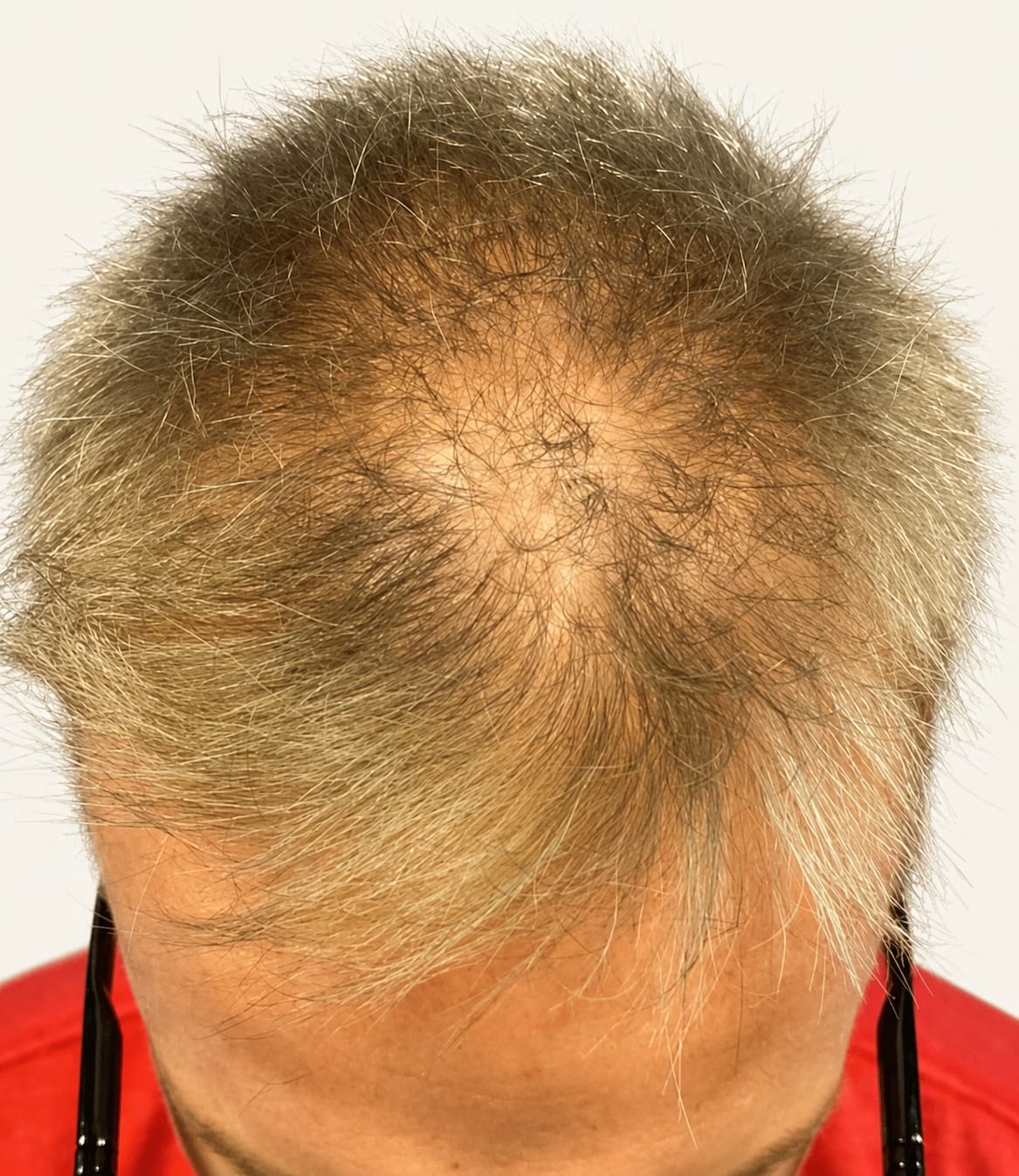
Yes, your results last. The follicles we transplant come from permanent zones of your scalp, so the restored hair is there to stay.
We also believe in setting honest expectations. Returning to the full density of your youth is not realistic for anyone, but a fuller, natural, and well-designed result absolutely is. Our focus is on making the very most of the donor hair you have through careful selection and meticulous placement.
Tailored to your plan
Because every plan is tailored to the individual, the cost of your FUE hair transplant depends on your specific goals and the scope of treatment. We walk through all of it transparently at your consultation, with no surprises.
To make treatment accessible, we offer financing through Cherry and CareCredit, so you can move forward on a timeline that works for you.


Surgeon-Led Hair Restoration in Omaha
FUE Hair Transplant FAQs
The first night after the transplant, there may be some discomfort that is usually controlled with a pain medication like Tylenol or a mild narcotic. By the next day, most patients feel fine. Infection and bleeding are rare, but post-op swelling in the forehead may occur in two to three days and is gone within another two to three days. The transplanted hairs fall out over the first few weeks, like leaves falling off a transplanted tree, then start to regrow after several months, and usually by the eighth or tenth month most of the hairs have come back.
Find Out if FUE Is Right for You
Not sure which method fits your goals? That is exactly what a consultation is for. In a consultation we will examine your hair loss, walk through your options, and recommend the right approach for you, whether that is FUE, another surgical method, or simply medication to start.
Please complete the form book a consultation and check availability.